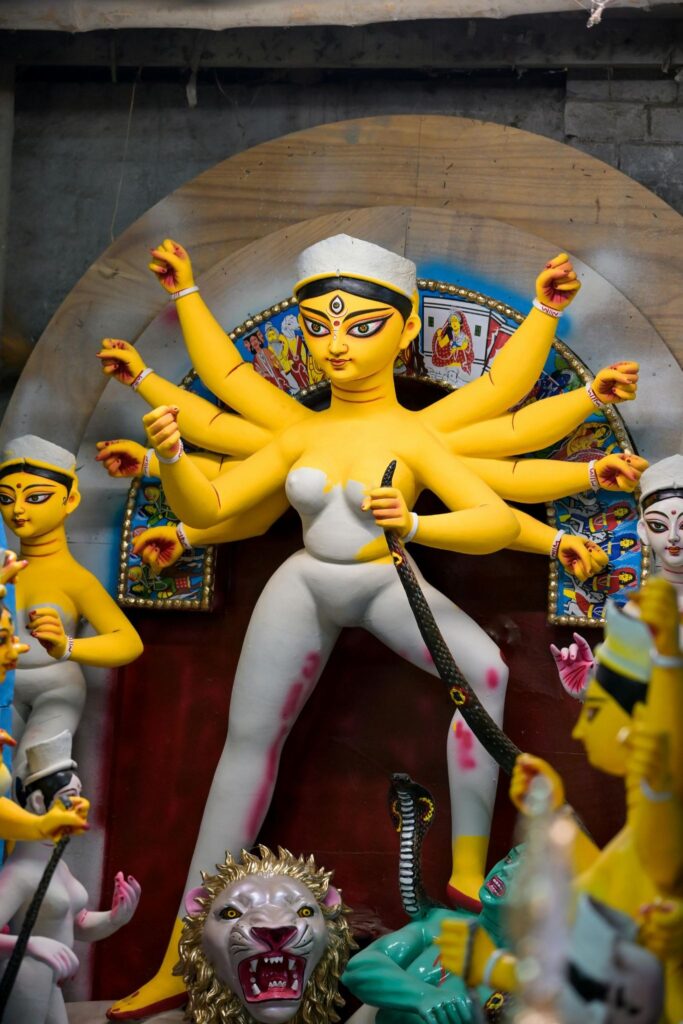
Durga Puja installations in India, https://www.pexels.com/photo/vibrant-durga-idol-creations-in-kolkata-workshop-34345510
The dhaak drums were loud. The lights were blinding. The queue for phuchka was longer than my patience. It was Durga Puja in West Bengal, and I found myself standing inside a pandal themed around climate change. Not gods in gold. Not the usual mythological scenes. Instead, there were installations made of recycled plastic, melting ice caps crafted from fabric, and animated projections explaining rising sea levels.
A few lanes down? An anime-inspired Durga. Further ahead? A pandal dedicated to sustainable development goals.
It hit me then. This wasn’t just festival décor. It was public art at full volume. This bold, thematic display was temporary, but we were not just visiting it; we were inside it. And this immersive experience was completely embedded in public space. That’s the thing about public art. It doesn’t wait for you to enter a gallery. It meets you in the middle of your life.
So What Is Public Art, Really?
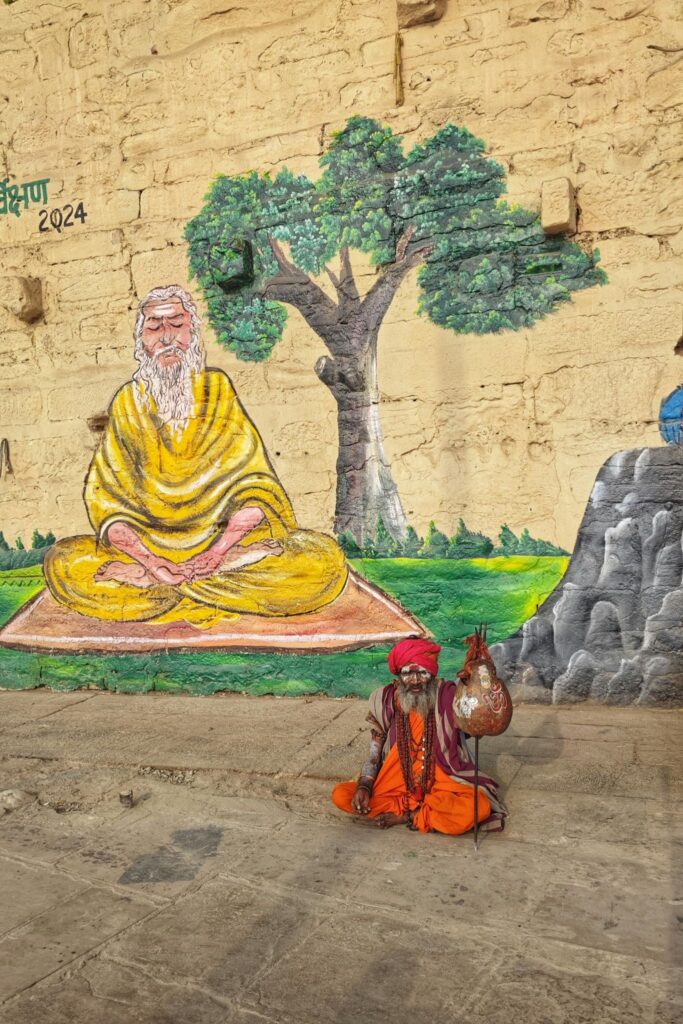
Public art is a hypernym for artworks in varied media placed in a public space, either temporarily or permanently. Murals, sculptures, graffiti, light projections, installations, or performances. Even augmented reality experiences are layered onto city walls! It’s not just paint on a wall but an idea occupying space. Public art is anchored in its engagement with its audience and accessibility to a wider public. The chai seller. The tech founder. The school kid. The grandmother is on her evening walk. It’s negotiated, messy, and rarely neutral, but it has an impact far beyond aesthetics.
It Becomes the City’s Face
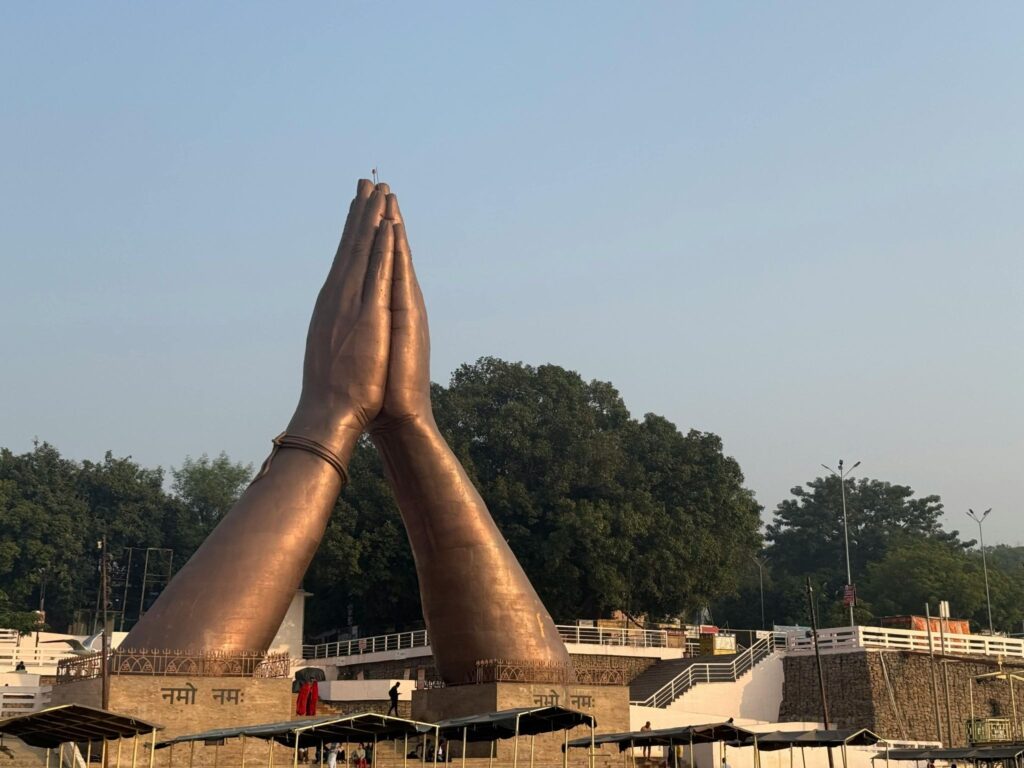
The famous sculpture at Namo Ghat, Varanasi, is a symbol of hospitality in Indian culture. https://www.pexels.com/photo/giant-praying-hands-sculpture-in-varanasi-34897929
Think of cities you’ve visited. What do you remember?
A sculpture in a park. A mural in a narrow lane. A massive installation you saw on Instagram before you even booked tickets. Public art becomes a landmark, a meeting point. It is shorthand for identity.
In India, the St+art India Foundation has completely reshaped how we look at urban walls. Delhi’s Lodhi Art District isn’t just a residential colony anymore. It’s an open-air gallery. Cities like Mumbai, Hyderabad, Chennai, and Kolkata have neighbourhoods reimagined through murals that blend folklore, political commentary, and pop culture.
In Bengaluru, the Bangalore Street Art Project brings Karnataka’s stories to the streets. You’ll find murals referencing local crafts, sustainability, and gender conversations coexisting on concrete. These works are declarations of who they are.
Social Cohesion Isn’t a Buzzword Here
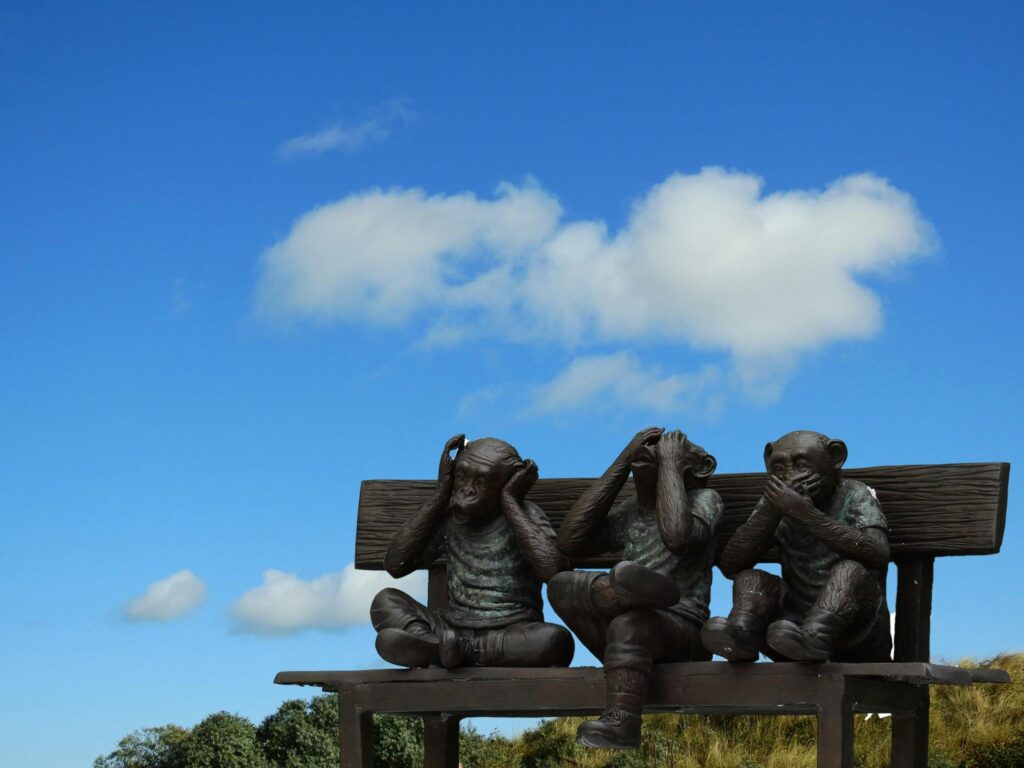
The famous monkeys of Gandhiji, https://www.pexels.com/photo/three-wise-monkey-decor-206784
I’ve stood next to strangers debating a mural.
“Why this subject?”
“Who is this woman?”
“Is this about farmers?”
That sidewalk conversation acts as a strong tool for social cohesion. Public art gives voice to people who are often sidelined. A wall becomes a platform through which marginalised communities get scale, and their stories get visibility.
When residents help design or paint a mural, something shifts. They stop seeing the space as “government property” and start seeing it as theirs.
This ownership builds pride that creates care. This sense of care builds a community. And yes, studies back this up. Participation in public art projects has been linked to higher civic engagement and even improved well-being. You can feel it when people gather around a fresh mural, phones out, smiles wide.
Let’s Talk Money (Because It Matters)
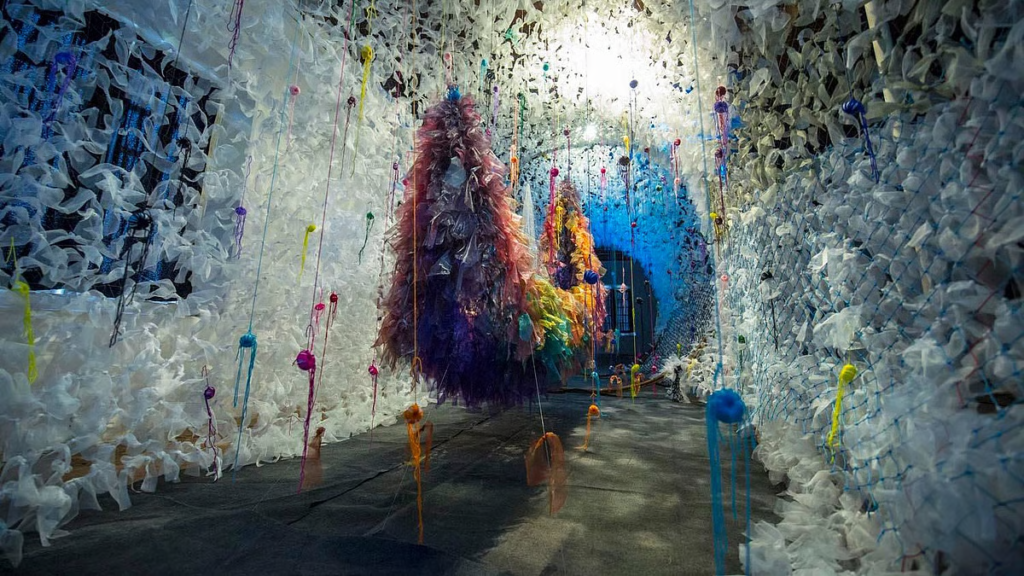
An art installation at the Kochi-Muziris Biennale 2026
Practically speaking, public art brings foot traffic that transforms into business. Neighbourhoods with strong visual identity attract cafés, pop-ups, and tours. Social media amplifies it, and youngsters flock to such vibrant spots. Suddenly, a forgotten lane becomes a weekend hotspot. Cities notice. Investors also notice. The Kochi-Muziris Biennale transformed the city into a global art destination. Every two years, warehouses and streets turn into exhibition spaces. Tourists pour in. Hotels fill up. Local businesses thrive.
But here’s what I find more interesting: residents feel seen. The festival doesn’t just import global art. It engages local communities and creates dialogue. That’s economic revitalisation with a cultural backbone.
Safety, Health, and the Psychology of Colour
There’s something almost magical about how a painted wall can change how safe a space feels. Try walking under grey, crumbling flyovers that felt intimidating and under the same structures covered in vibrant murals to know the difference.
Research suggests that areas with public art often report lower crime rates and improved perceptions of safety. It’s not that paint stops crime. It’s that visible care that changes behaviour. Art signals presence. Presence signals attention, and attention discourages neglect.
There’s also the mental health angle. Exposure to art reduces stress. Participating in art boosts confidence. One London survey found that 84% of participants felt regular involvement in public art improved their well-being. Creativity makes us slow down and look up. We breathe differently.
Urban Regeneration and the Comeback of Forgotten Spaces
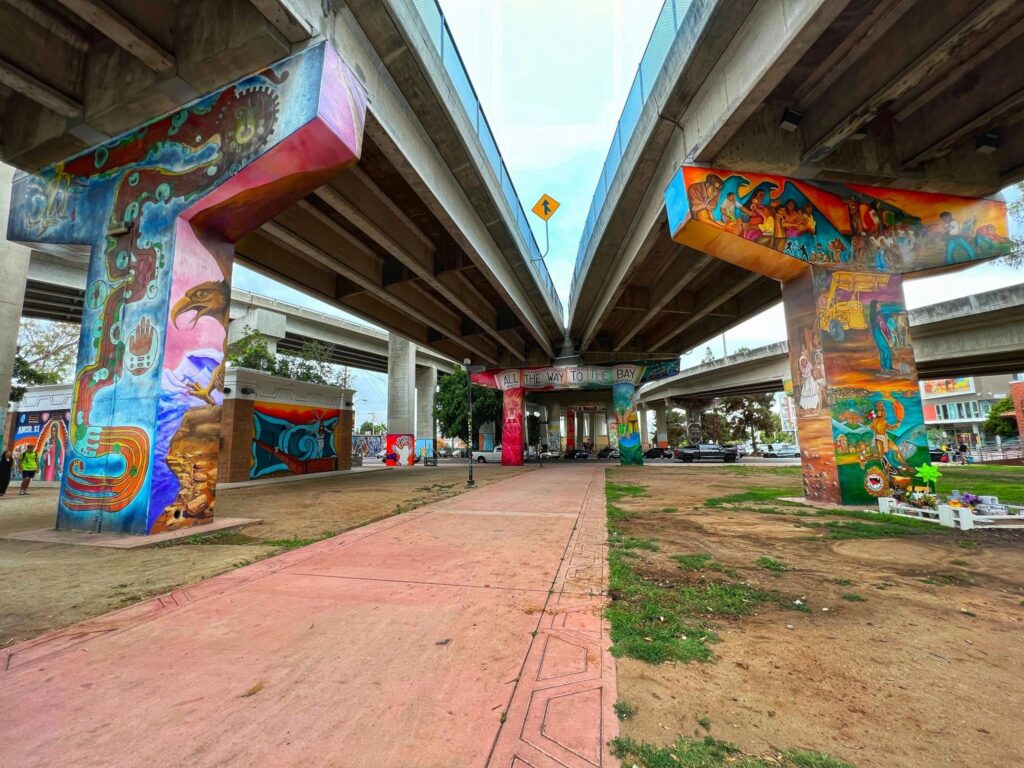
Graffiti on flyover walls makes them more lively and interactive. https://manavgupta.in/public-art/
Public art has a knack for reviving dead corners, be it vacant lots, empty factory walls, or railway underpasses. These art hubs add beauty and meaning. This is placemaking in action.
Geography influences the medium. Coastal towns use marine themes. Heritage areas revive traditional crafts in mural form. In industrial towns, artists sometimes use factory waste to create installations. Imagine a steel town like Bhilai using scrap metal to build sculptures about sustainability. The material itself carries the city’s story. It’s not random. It’s rooted, and when done right, it respects the space instead of imposing on it.
But Let’s Not Romanticize Everything
Who decides what goes up?
Who funds it?
Who benefits?
Public art isn’t automatically democratic. There’s a real risk of “art washing”, where developers sponsor murals to increase property value, which then drives up rents and pushes out the very communities the art is claimed to represent.
Gentrification is real. State-sponsored memorials can push a single narrative of history. Corporate-funded murals can become subtle advertisements, and without genuine local engagement, public art becomes surface-level branding.
That’s why inclusive planning matters. Local voices and artists help in contextualising sensitivity. Otherwise, it covers deeper issues.
Protest, Participation, Power
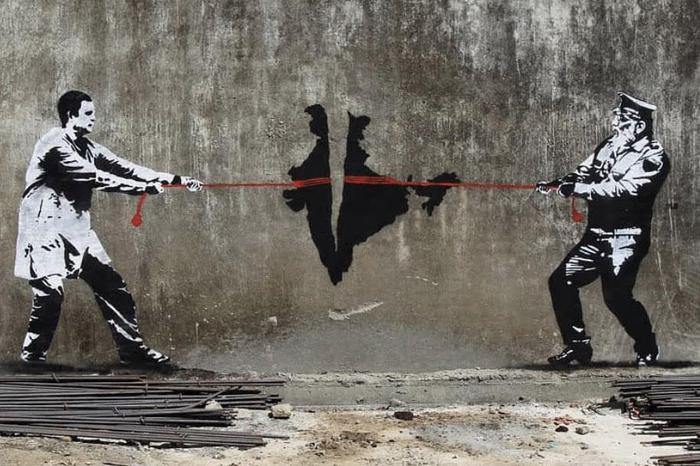
TYLER’s Banksy-inspired artwork depicts Rahul Gandhi and PM Modi, leaders of India’s major political parties, engaging in a disastrous tug-of-war
Public art has always flirted with activism (graffiti, street performances, impromptu installations). Artists often stand at the forefront of social movements. They use walls as megaphones to increase sensitivity towards public issues like climate change, gender justice, mental health, and/or political dissent.
Art acts as resistance and a democratic practice. Public space becomes a stage for civil dialogue/conversation, and sometimes, public art is the only accessible way for communities to express dissent safely.
Technology Is Changing the Game
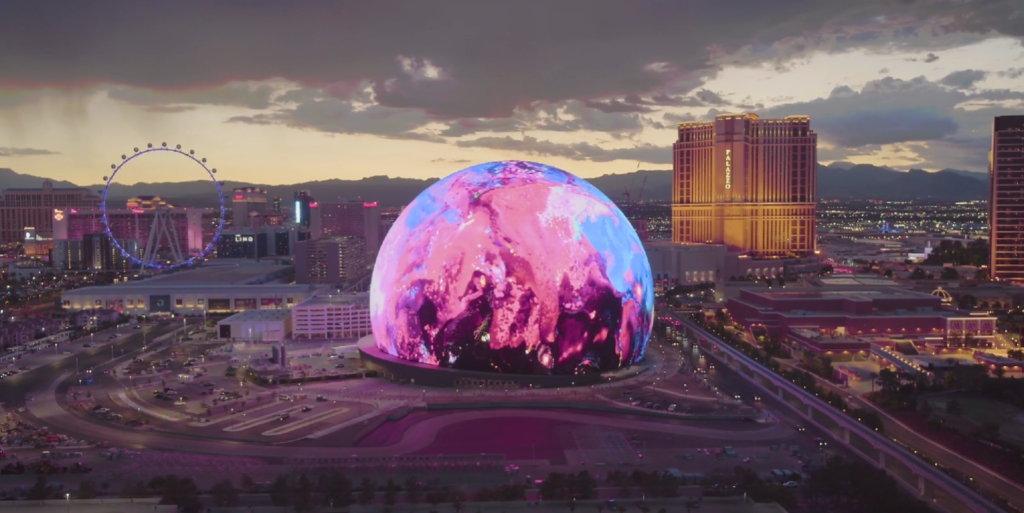
We’re also seeing digital layers being added to physical walls. Scan a mural with your phone, and it animates through AR. Installations respond to sound or movement. Light projections transform buildings at night. Interactive public art invites you to engage, not just observe. Temporary pop-ups test ideas before permanent installations are approved. The future of public art is immersive, multi-sensory, and collaborative. And honestly? It’s exciting.
Who Is the Public in Public Art?
This question keeps coming back to me. Is it tourists, investors, or residents?
Public art should serve citizens first and not political agendas or commercial interests. It sits at the intersection of shared history and evolving culture. If the artwork physically interprets the needs, dreams, and even prejudices of the people who live there, it resonates; else, it fades.
The Infinite Potential
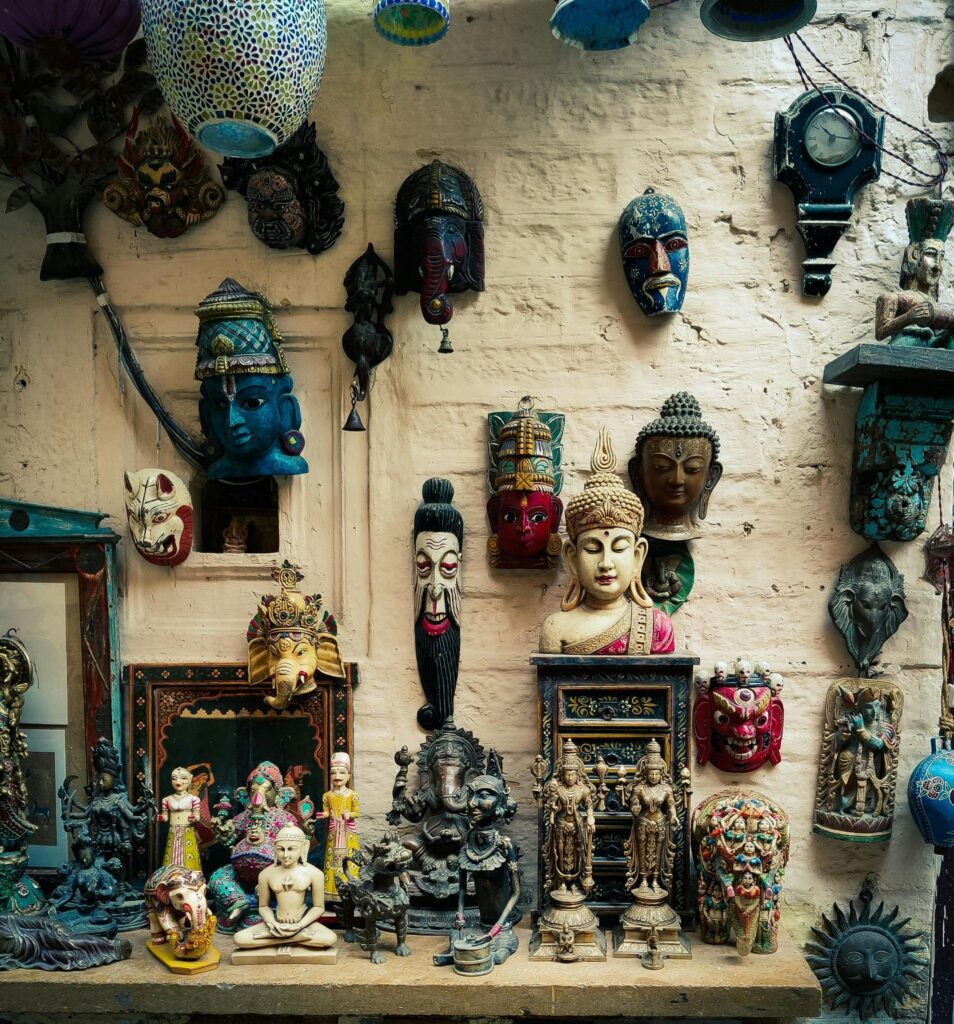
From Durga Puja pandals tackling sustainability to murals addressing climate change to interactive installations encouraging eco-friendly behaviour, public art has a range. Altogether, it can raise awareness, heal, provoke, and celebrate. India has always had traditions of expression in public space through temple sculptures, ritual performances, and street theatre. Today, we are renewing public art by reinstating the idea that public space belongs to the public. That walls can speak and that cities aren’t just infrastructure. They’re living, breathing organisms shaped by stories. The next time you pass a mural or stumble into a themed installation, pause and listen carefully to what it speaks to you.
Public art is a negotiation between past and future, between aesthetics and politics, between identity and economy. When done thoughtfully, it transforms cities, and when art makes you feel proud of where you live. That’s when a city truly comes alive.
References
Kucukali, Ufuk Fatih. “Public Art Practices in Urban Space: The Case of Istanbul.” Street Art & Urban Creativity, vol. 9, no. 1, 2023, pp. 12–25. DOI: 10.25765/sauc.v9i1.639.
Cuffie, Hilary Adina Theresa. “Public Art and the Impact It Has on the Society.” Journal of Contemporary Indonesian Art, vol. 7, no. 2, 2021, pp. 98–106.
Erdmann-Goldoni, Christin. “Contemporary Art in Public Spaces: Forms of Expression, Social Significance, and Revitalization.” European Public & Social Innovation Review, vol. 9, 2024, pp. 1–20. DOI:10.31637/epsir-2024-867.
Zhou, Yun, et al. “Artistic Interventions in Urban Renewal: Exploring the Social Impact and Contribution of Public Art to Sustainable Urban Development Goals.” Sustainability, vol. 16, no. 3, 2024, p. 1142. DOI:10.3390/su16031142.