
Interview
Meenakshi Thirukode In Conversation with Art Beyond Contemporary
Interviewed by Rageshree Ranade for Art Beyond Contemporary
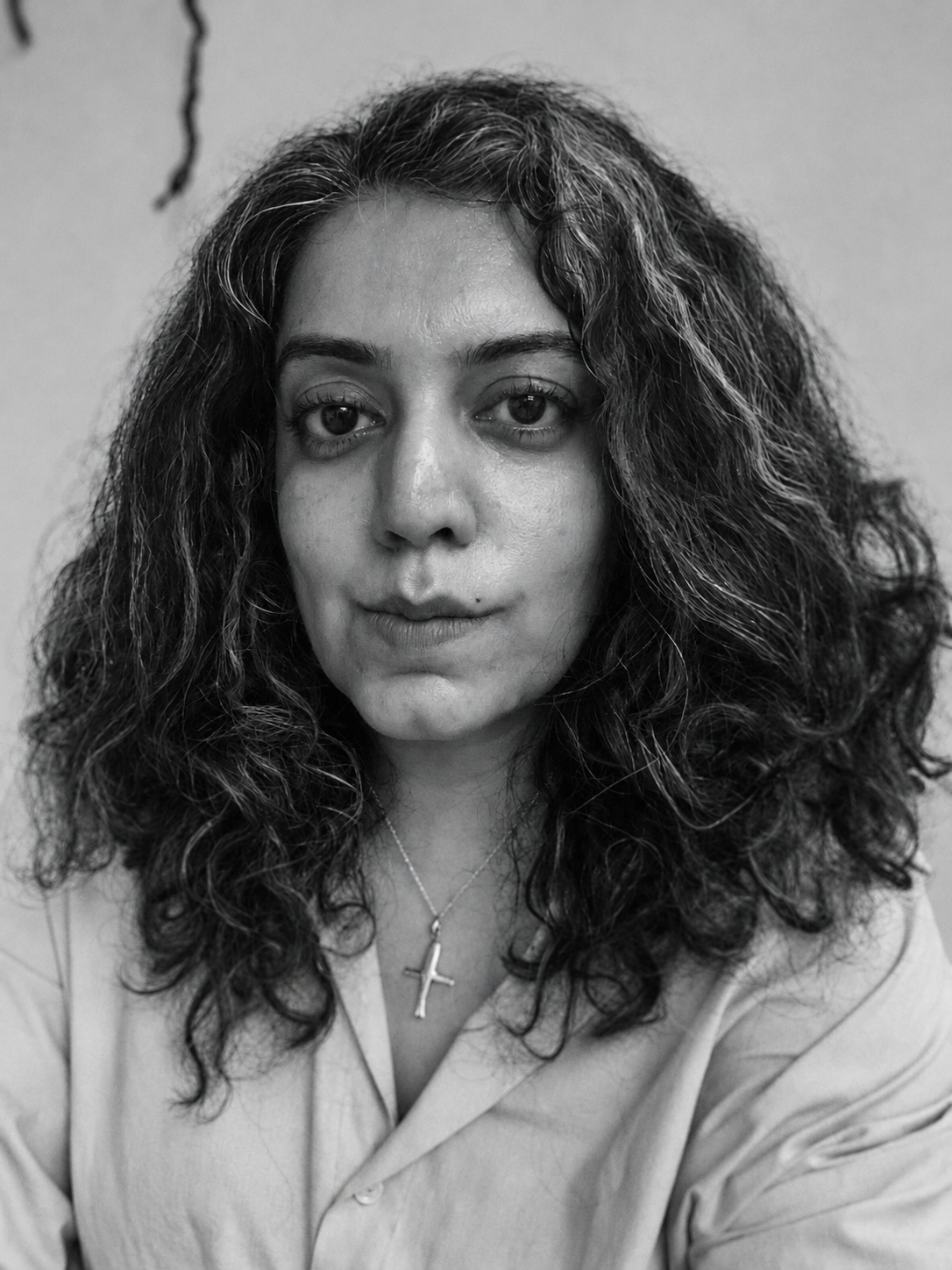
Meenakshi Thirukode: Rethinking the Institution
Meenakshi Thirukode is an independent curator, writer, and cultural worker whose practice is anchored in institutional critique, collective study, and radical pedagogy. From her work with the School of Instituting Otherwise to leading heritage spaces like DakshinaChitra, Meenakshi has spent her career questioning how art spaces operate, whom they protect, and whose voices hold cultural capital.
In this conversation, we talk about vision, legacy, sustainability, labour, and what it truly means to sustain an art practice beyond trends, beyond markets, and into something much more enduring.
Rageshree Ranade: Meenakshi, you have had a beautiful, diverse journey. Looking back, was there a single moment when you realised that curating exhibitions alone wasn’t enough, that you wanted to rethink the institution itself?
Meenakshi Thirukode: Thank you for taking the time to follow my work and for giving me this space to articulate some of what’s going on in my practice.
There were multiple moments that called for an urgent rethinking of the ‘institution’. One was the death by suicide of Mark Fisher. This happened while I was at Goldsmiths, and I saw how institutional murder occurs: the mechanics of the system behind it, its impact on his students, and how the university responded. I could see how this trajectory plays out across institutions and systems created and maintained to exert violence against people and communities.
I’ve always believed in the power of knowledge, how it is held through intersecting histories, and how stories and storytelling transfer this knowledge to help us understand the present and what to leave behind for the future. Then you realise that this, too, is in the hands of a few and dictated by how capitalism operates.
Mark Fisher’s writing was influential in shaping much of what became foundational to the School of Instituting Otherwise. Along the way, I also met others working around this idea. But I found curating very limiting and, honestly, disingenuous. When I returned from Goldsmiths, everyone was talking about curating ‘care’, and honestly, it was just a co-option. If it weren’t, we wouldn’t have seen the kind of antagonism some of us faced for being part of the art world’s #MeToo movement. Many ‘curators’ who supposedly supported those harmed are now at the peak of their careers, enabling those who committed sexual violence. This includes building careers in countries complicit in the ongoing genocide in Palestine. A large part of the art world, when the School began, and the #MeToo movement was peaking, didn’t really ‘care’.
Times are changing, so you’ll see some vague support for Palestine and shock at the Epstein files. But, as I said, a vast majority are in their own world because power and money are mostly what they care about. Once curating became embodied in figures like Hans Ulrich Obrist and Raqs Media Collective, it became about individuals and the power vested in them to help others gain class mobility, cultural capital, and so on. These were, and still are, relationships shaped by power dynamics. That was a hard lesson to learn. Peers might still disagree with me, but I’m no longer here to make them unlearn anything. My focus is the School of IO and the people I work with to build it.
What I’m getting at is that curating is limiting when it creates superstars or individuals who, within a capitalist framework, have too much power to dictate how culture operates, circulates, gets created, and by whom.
RR: You’ve described yourself as a storyteller before describing yourself as a curator. What kinds of stories does contemporary art still struggle to tell?
MT: Contemporary art fails to be discerning and curious. It lacks the willingness to take risks and chances, as well as a true political foundation, and is, at best, an aesthetic exercise. There’s provocation, but no depth. I think the moment that label is attached to a creative practice, it relegates it to market dynamics.
Art in the present is happening elsewhere. You have to train yourself to find it, or let it find you. If creative expression is at the core of what you’re trying to do, there’s a lot of growing to do as a human being. That also involves your relationships with individuals and what you’re building, whether it’s a one-on-one relationship or a larger community of friends and collaborators.
I don’t want to think of the current systems in which contemporary art functions as inevitable. Something, somewhere, is always escaping that capture, and you have to be able to shape yourself to discern it. There are tools to do that.
RR: If future historians were trying to understand India through today’s contemporary artists, what would they miss if they looked only at exhibitions?
MT: They’d miss where the real culture was being produced, consistently and without hyper-productivity or hyper-visibility as prerequisites for being considered valid. That’s not surprising when we think about how history operates: who writes it, for whom, and why.
My master’s thesis at Christie’s examined Anish Kapoor’s trajectory. His identity as an artist born and raised in India was essential to the multicultural timeline Britain was working with in the 1990s. Soon, that very identity was rejected as he solidified his position as a British artist, complete with the pomp of a knighthood. His galleries, curators, and critics framed him within European minimalism. Then, when the Indian art market boomed, Sir Anish had a ‘homecoming’ and, of course, in true-blue capitalist style, patented a colour.
If this is meant to be some kind of critique or provocation of contemporary art, I’d say it’s lukewarm and self-serving, or self-aggrandising at best. So, future historians should perhaps not trust history so much. That’s a good start.
RR: You’ve observed the Indian art ecosystem through commercial galleries, independent initiatives, public programmes, and educational spaces. What has changed the most in recent years, and what surprisingly hasn’t?
MT: I haven’t really been observing that space because I’ve consciously and intentionally stayed away from it, even though I have friends in that world and peers I respect and admire as individuals. It’s their world, not mine.
I did find myself at the Kochi Biennale after 12 years, only because I was with friends and had a trusted space to talk about the aftermath of speaking out about sexual violence in the art world. Guess how many people from the Indian art ecosystem turned up? None. Just the general public, close friends, and two or three well-wishers from institutions adjacent to the art world. That should tell you what has changed and what hasn’t.
RR: Younger practitioners today seem less interested in fitting into existing systems and more interested in building their own. Does that make you optimistic?
MT: Yes, for sure. I think systems are meant to be torn down, and if that’s possible in India’s very market-driven contemporary art world, then more power to them. I’m a big believer in degrowth.
At the same time, I understand that in an ecosystem like India’s, where there is very little public funding or grant support and spaces and money flow through individuals with class and caste privilege, it’s hard to do your own thing when there are real material needs.
The Indian art ecosystem is extremely fragmented. Even when young people and others like me are trying to do something different, there isn’t enough conversation between us, and I believe that has something to do with trust. There isn’t much trust between people. Tiny groups work in silos, and so much depends on interpersonal dynamics: whom you build with and whom you work with. It’s less about the work and the value it holds. So, I’m a measured and cautious optimist, I suppose.
RR: Drawing from your experience building platforms like the School of Instituting Otherwise, what happens to the language of institutional critique when it moves from a Delhi gallery into a regional hub like Jabalpur? How do we prevent ‘alternative spaces’ from becoming a localised version of the systems they seek to critique?
MT: I think the language of institutional critique is already quite Eurocentric, so it’s a bit of a stretch to use it to understand what might be happening in India. Having said that, the problem of everything alternative becoming the very system it critiques is an old one. As long as we operate under techno-capitalism and a hyper-surveillance state, with power and money vested in the elite class, including through philanthropy, we will keep replicating what we’re trying to dismantle.
I haven’t registered the School of IO, applied for grants, or done fundraising. At best, I operate through people paying for workshops, which has only been the case for the past year of this decade-long project. I’ve also been part of programming at institutions trying to engage with these subjects, which has helped sustain it. Otherwise, I’ve taken breaks from running the School because I have to hold a job to pay the rent.
And I’m still quite privileged, protected, and connected to a substantial network. If you look at ‘alternative’ spaces in India, some are run by individuals from very influential families or with inherited wealth and power. Remove that person, and the space collapses. This is the case whether the critique is happening in Delhi, Ahmedabad, or Jabalpur.
There are other cultural ecosystems, and you need to approach them with the knowledge that they’ve existed for a long time, predating the marketisation of contemporary art and the emergence of alternative spaces in India.
RR: Is there a question you wish artists asked themselves more often before making work?
MT: Why am I making this work, and for whom?
RR: What idea are you currently unlearning?
MT: The idea of community and what justice held together and delivered through consensus looks and feels like.
RR: You’ve spent years asking how institutions shape people. I’m curious about the reverse: what kinds of people are capable of building institutions that don’t eventually reproduce the hierarchies they began by resisting?
MT: Those who have been harmed by the system and understand that if they don’t understand themselves, their inner worlds, and their own relationship to the system, they can end up working at the Master’s house themselves.
Those who consistently show up for others selflessly; people who don’t engage in transactional relationships and who share their resources and knowledge with someone entering this world with curiosity, hope, and trust, and continue to do so when that person takes risks or makes moral and ethical choices – that come at a cost.
I learnt from people like this, and I try to emulate the care, consistency, and sense of safety they have provided to others who might need the same from me.
RR: If contemporary art had one responsibility to the next generation, what would you want it to be?
MT: To be honest and to be okay with abandoning projects and practices that aren’t critical or risk-taking. One thing many well-meaning people say is that we need to compromise to make it in this world. Compromise as a way of being in the art-world ecosystem needs to go away. That alone could tremendously shift what art can be.
It’s about discerning what serves something bigger than just you. Wisdom goes a long way. I think the next generation needs better mentors and elders, and that’s the responsibility of my generation.
This conversation marks the beginning of an ongoing editorial series by Art Beyond Contemporary, engaging in dialogues with practitioners and cultural mediators across disciplines. The intention is to create a space where practice can be discussed with depth and care, looking beyond exhibitions towards the systems, labour, and thinking that sustain them.