The Indian art market abounds in a diversity that has found patronage in almost every corner of the globe. Today, it is no surprise to find an M.F. Husain in an influential estate or a Madhubani painting in a modest household. While any observer might guess that the art market is a niche concept heralded only by economic clout, the reality is more riveting. By tracing the journey of the Indian art market, from contraction to calibration, and now, a profound move toward confidence, this article explores the factors driving the art industry.
From Speculation to Self-Perception
In 2008, the Indian art market contracted with unnerving speed, exposing the fragility of speculation and the limits of borrowed optimism. Nearly two decades later, the market of 2026 feels assured. Having shunned “borrowed scales”, India is now shaping a market that trusts the logic of its own becoming. It operates as a living archive, recording shifts in taste, cultural self-perception, and a new “logic of luxury”.
In this landscape, art is no longer bought only for the walls; it is also bought for the balance sheets. It acts as a tangible hedge against inflation and a statement of cultural capital. The numbers make this shift undeniable. According to the Hurun India Art List, there was a 59% increase in lots sold between 2021 and 2024 in Indian art auctions. While paintings still dominate the market, sculpture is finding its stride, with many sculptor-artists seeing valuations double in a single year.
The New Logic of Luxury
This inflection point is not accidental. It mirrors India’s sustained economic growth, a generational shift in how wealth defines itself, and increased international visibility for South Asian creativity.
India is expected to become the third-largest economy in the world by 2030. With this economic rise comes a new logic of luxury. Here, the elites do not measure success merely through real estate or cars. They’re investing in what Bourdieu calls cultural capital. Now art, in collaboration, decorates investment portfolios and also adorns boardrooms, penthouses, and second homes.
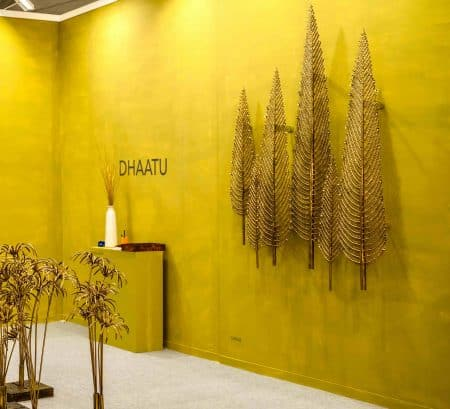
An exhibit from the Delhi Crafts Council at the India Art Fair 2026 – https://indiaartfair.in/exhibitors
Benchmarks of Success
To understand this resurgence, one must recall the 2008 financial crisis, when Indian art prices plummeted, and speculative bubbles burst. But the past few years have woven a new story: one of organic and sustained growth. This resurgence is punctuated by historic global validation. We are no longer just looking for external approval; we are setting the price for it.
When Amrita Sher-Gil’s The Story Teller (1937) crossed $7.45 million in 2023, it felt historic. But when M.F. Husain’s Untitled (Gram Yatra) nearly doubled that record a year later at $13.8 million at Christie’s New York, it signalled global validation. And just months later, V.S. Gaitonde’s luminous ochre abstraction fetched ₹67.08 crore ($7.6 million) at Saffronart, making him India’s second-most expensive artist.
Today, the total Indian art market is valued at approximately ₹3,000 crore and is projected to triple to ₹10,000 crore by 2030. This growth is fundamentally driven by domestic demand. Paradoxically, the pandemic years strengthened this base, as affluent Indians shifted their disposable income toward local cultural assets.
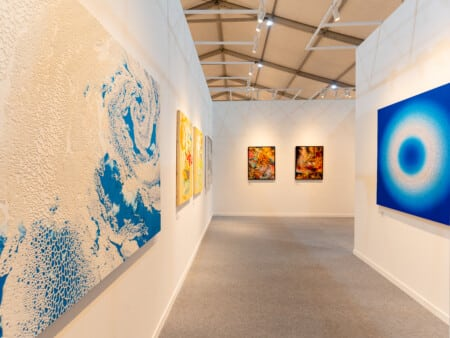
An exhibit by the Galarie Geek Art at the India Art Fair 2026 – https://indiaartfair.in/exhibitors
A Diffusion of Capital
Indian art enjoys increasing international exposure; exhibits from The Imaginary Institution of India exhibition at London’s Barbican Centre to Arpita Singh’s solo at the Serpentine Galleries increase our prestige, but the current boom is fundamentally driven by domestic demand.
Paradoxically, the pandemic years strengthened this base. With fewer travel options and more disposable income, affluent Indians began spending more locally, and art became a natural beneficiary. Art fairs like the India Art Fair, Art Mumbai, and festivals in Kochi, Goa, and Jaipur have nurtured a vibrant homegrown ecosystem.
The geography of collecting has shifted. The “lived reality” of the 2026 market is that collectors are no longer concentrated in Delhi and Mumbai; they are emerging from Surat, Indore, and Gujarat. This is a diffusion of cultural capital across India’s urban map.
Furthermore, the audience is diversifying. Gallerists now report a surge in collectors in their 30s and 40s, often engaging in the “mid-range” segment (₹5–25 lakh). This generation bridges the gap between a cultural renaissance and the age of algorithms, using digital platforms like Saffronart and Prinseps to erase geographical limitations.
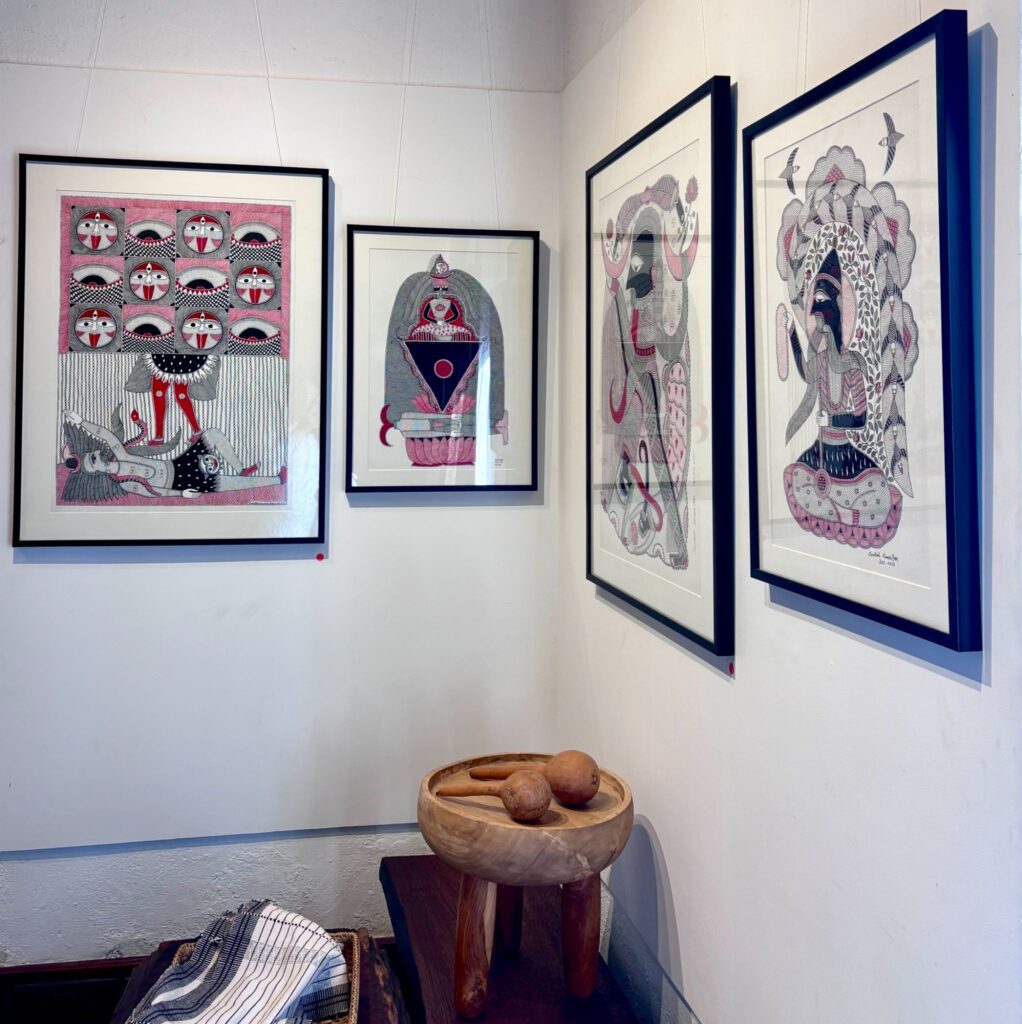
Cultural Renaissance meets Age of Algorithms.
Today, the Indian art market represents both a cultural renaissance and a rapidly expanding economic sector, and the digital shift has made art all the more accessible. The emotional appeal of art is blending seamlessly with its investment value, creating what experts call “art as lifestyle”. The collectors in Tier-II cities can access online auctions and hybrid fairs more easily. Platforms like Artnet, Saffronart, and Prinseps now attract global bidders, erasing geographical limitations. The globally connected and financially confident millennials and Gen Z buyers are using these tools to explore, engage, and invest. Many of them are first-time buyers, attracted to the affordable contemporary segment (under $5,000).
The Next Frontier: Substance over Scarcity
As prices for modern masters climb, collectors are turning toward contemporary voices that mirror today’s ecological and social realities. Younger names like Nandan Purkayastha and Deveshi Goswami are benefiting from a “spillover effect,” in which the focus shifts from mere scarcity to creative substance.
However, this growth faces a structural hurdle: the “Missing Museum”. India’s market thrives largely on private patronage. To sustain this momentum, we require publicly funded institutional frameworks or tax incentives for conservation and education. We have many artists, but not yet enough established galleries or museums to house the sheer volume of our creative output.
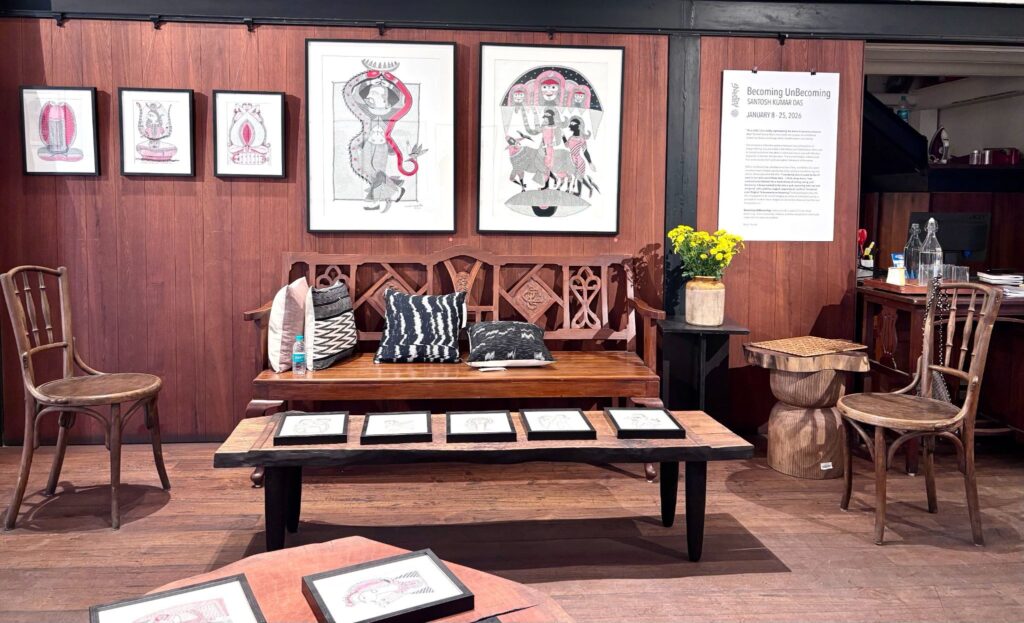
Santosh Kumar Das, installation view of Becoming UnBecoming at the Artisans Gallery, Mumbai – January, 2026
Art as Soft Power
Art is undoubtedly one of India’s greatest soft powers. It communicates identity, plurality, and imagination more effectively than diplomacy ever could. From Kochi to London, Indian artists are redefining the narrative of the Global South, proving that creative economies can coexist with capitalist ambition.
The 133% surge in South Asian contemporary auction activity from 2016 to 2024 underscores this global curiosity. What was once peripheral to the Western art circuit is now a focal point.
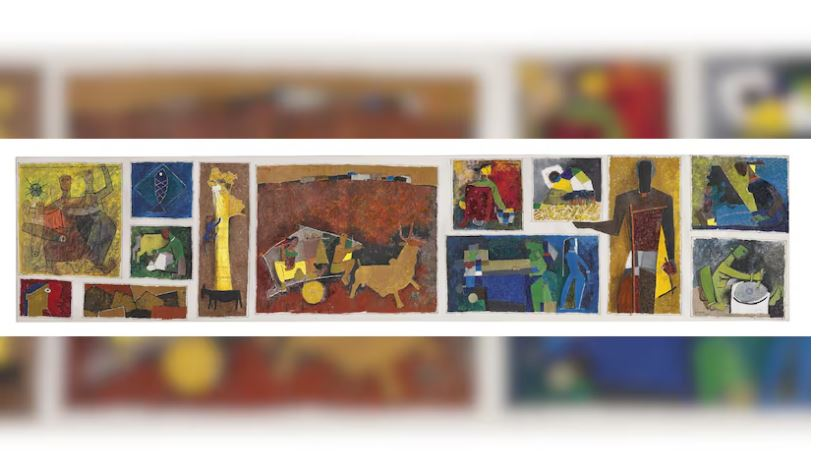
M.F. Hussain, exhibit of Gram Yatra breaks record by selling at Rs. 118 Crore at Christie’s Auction
Collecting the Future
Art is India’s greatest soft power, communicating plurality more effectively than diplomacy. For those looking to enter this ecosystem, the rules of engagement are clear:
- Prioritise Provenance: Certificates and history are non-negotiable.
- Diversify Media: Balance modern masters with promising mid-career contemporaries.
- Think Long-Term: Liquidity requires patience; the best returns are both emotional and financial.
The Indian art market has something for everyone; balancing tradition and innovation, heritage and contemporary thought, it offers enormous opportunities for artists, collectors, and investors alike. From ₹15 crore in 2000 to a projected ₹10,000 crore by 2030, India’s art market is no longer on the fringes of global culture. We are witnessing a cultural reawakening where India’s imagination has become its most profitable export.
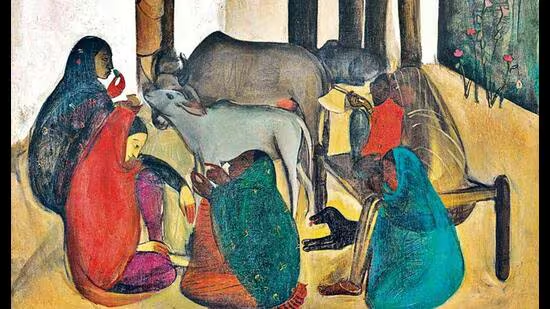
The avant-garde artist Amrita Sher-gil’s oil on canvas “The Story teller” sold for ₹61.8 crore. – https://www.visionsarts.com/amrita-sher-gils-the-story-teller-sets-new-record-with-%E2%82%B961-8-crore-sale/
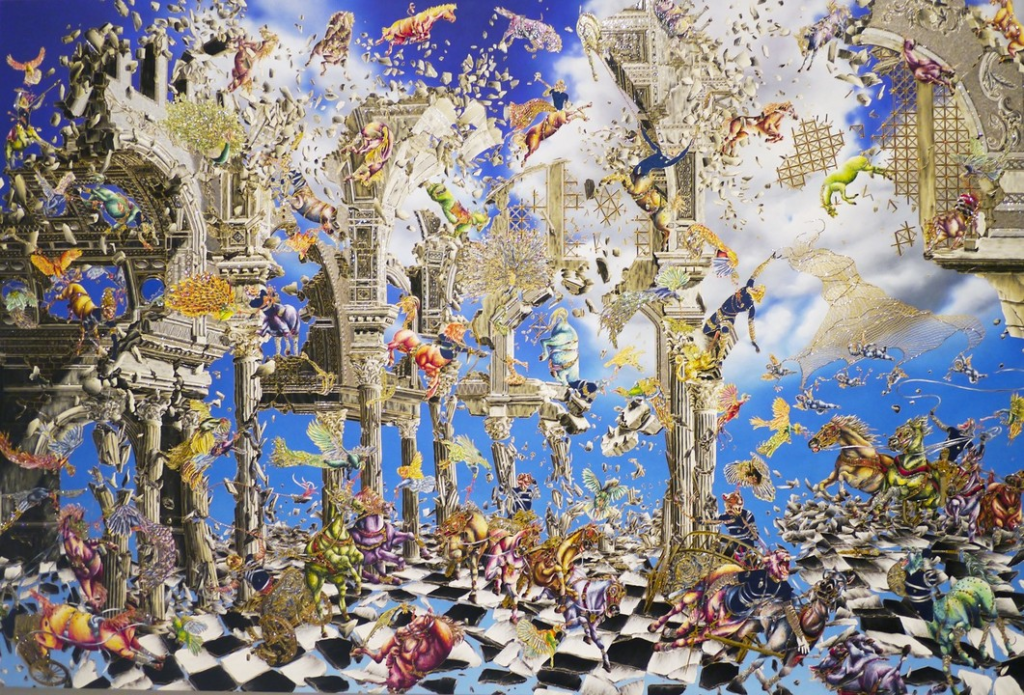
‘Paradise Lost’ by Raqib Shaw, courtesy the artist and Pace Gallery – https://www.linkedin.com/pulse/beyond-indian-art-market-boom-lynn-hilloowala/
References
https://www.asign.art/art-market-reports/Asign_FY%202024%202025%20Indian%20Art%20Market%20Report.pdf
https://arttactic.com/reports/global-art-market-outlook-2025?uni_match=0&qa=1759691479338
https://www.thecore.in/podcasts/inside-indias-art-market-boom-836711